
Free Consultation
(903) 230-5600
Free Consultation
(903) 230-5600
Menu
Close
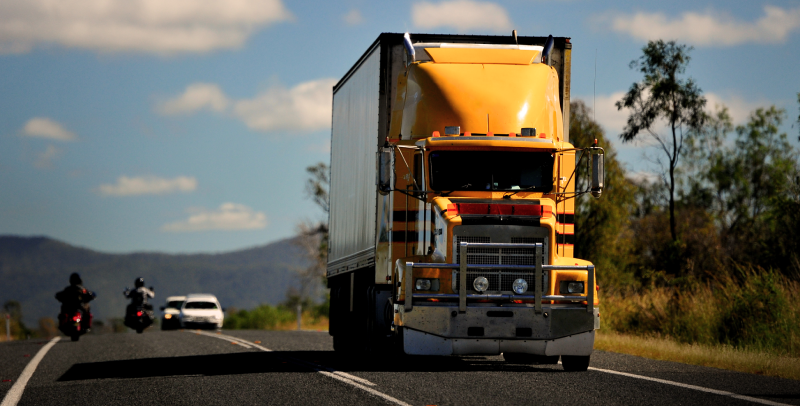
Yellow Truck riding trough an Australian highway at golden hour.
Personal Injury /
10.19.2019

What’s in a Name? That Which We Call Trucks

Sorey & Hoover, LLP
Share to Social

The U.S. government classifies trucks according to their maximum operating
weight, which includes the maximum load the truck can carry and the weight of
the truck itself. The Department of Transportation (US DOT) assigns trucks a
Gross Vehicle Weight Rating (GVWR) and classifies them accordingly, ranging from
Class 1 (the smallest) to Class 8 (the largest). One thing we know about trucks
is the bigger they are, the harder they crash.

If a truck is assigned a GVWR of 10,000 pounds, that is the maximum amount it is
certified to weigh, including passengers, cargo, and fuel. Weigh stations on the
side of the highway are there to ensure that truckers driving rigs with a total
weight of more than 26,000 lbs. don’t exceed their GVWR. Trucks are classed in
this way by the government and manufacturers for purposes of safety regulation,
registration, and commercial designation.

Truck GVWR Classifications

  •  Class 1 (6,000 lbs. or less: This class includes minivans,
    cargo vans, SUVs, and pickup trucks such as Toyota Tacoma and Nissan
    Frontier.
  •  Class 2 (6,001 to 10,000 lbs.): Larger minivans and cargo
    vans, full-size pickups, and step vans are included in this category. Class
    2 trucks include Ford F-150, Toyota Tundra, Nissan Titan, Chevrolet
    Silverado 1500, GMC Sierra 1500, and Ram 1500.
  •  Class 3 (10,001 to 14,000 lbs.): This includes walk-ins,
    box trucks, city delivery trucks, and heavy-duty pickups. Basically all 3500
    pickups are included in Class 3.
  •  Class 4 (14,001 to 16,000 lbs.): The Class 4 category
    includes larger walk-ins, box trucks, and city delivery trucks.
  •  Class 5 (16,001 to 19,500 lbs.): This class encompasses
    bucket trucks, large walk-ins, and large city delivery trucks.
  •  Class 6 (19,501 to 26,000 lbs.): This includes beverage
    trucks, school buses, rack trucks, and single-axle trucks.
  •  Class 7 (26,001 to 33,000 lbs.): Refuse trucks, furniture
    trucks, city transit buses, and truck tractors are included in this class.
  •  Class 8 (33,001 lbs. to HUGE): Cement trucks, dump trucks,
    larger truck tractors, and sleeper cabs are included in Class 8.

Manufacturers also consider that a Class 2B exists for vehicles with a GVWR of
8,500 to 10,000 lbs., because they are not required to provide EPA miles per
gallon estimates on window stickers for vehicles weighing 8,500 or more. This
category includes heavy-duty pickups, such as Ram, Chevrolet, and GMC 2500s and
Ford Super Duty.

Truck Driver Classifications

The Federal Motor Carrier Safety Administration (FMCSA) requires drivers to have a commercial driver’s license (CDL) to operate
certain commercial motor vehicles. States issue CDLs and commercial learner’s
permits (CLPs) according to federal standards with the following license
classifications:

  •  Class A: Any combination of vehicles with a gross
    combination weight rating or gross combination weight (whichever is greater)
    of 26,001 lbs. or more, including a towed unit or units with a GVWR or gross
    vehicle weight (whichever is greater) of more than 10,000 lbs.
  •  Class B: Any single vehicle with a GVWR or gross vehicle
    weight of 26,001 lbs. or more, or any such vehicle towing a vehicle with a
    GVWR or gross vehicle weight that does not exceed 10,000 lbs.
  •  Class C: Any single vehicle or combination of vehicles that
    do not meet the definition of either Class A or Class B but is designed to
    transport 16 or more people, including the driver, or is transporting
    hazardous or toxic materials.

Truck Accidents in the Permian Basin

The Permian Basin is an oil and gas-rich region in southeastern New Mexico and
West Texas. In the past several years, due to advances in hydraulic fracturing
(fracking) technology, it has become the busiest oil region in the nation.
Smaller highways in rural areas in Texas and New Mexico have become inundated
with traffic to and from the many oil fields in this region, and truck accidents have increased dramatically. Truck crashes in the Permian Basin can be particularly hazardous, because of the remoteness of the area and the cargos the trucks are carrying. Oil and gas trucks and any big rigs can cause serious
damage when they collide with passenger vehicles, because of their sheer size
and weight. When the truck is a tanker carrying fuel, the hazards are even
greater. If you have been hurt in a crash with a large commercial truck, contact
Permian Basin trucking accident attorney at the Sorey Law Firm P.L.L.C at (903) 230-5600 as soon as possible. We will travel to you if you are unable to come to us.


Feel free to reach out and speak with our experienced team of professionals who are here to provide you with expert guidance.
A Plan within 24 Hours
Get Started Now
Call (903) 230-5600 or fill out the form below to get started with a free case evaluation. We’ll contact you with the next steps to move your case forward.
The information on this website is for general information purposes only. Nothing on this site should be taken as advice for any individual case or situation. This information is not intended to create, and receipt or viewing does not constitute a client relationship.
Contact us
Send Us Your Case Details
We’ll respond and let you know the best way to proceed with your case.